Oracle SQL & PL/SQL & Summer Internship Training
Book Free Demo Class
Dev Technology Solutions offers Oracle SQL & PL/SQL training in Salem, with classroom sessions at our centre in RBT Mall, Meyyanur Byepass Road, Salem, and live online classes. The 20-module syllabus covers SQL Basics, Constraints & Database Objects, Querying Data and Oracle Built-in Functions, with hands-on practice in every module and real-time project work at the end of the course.
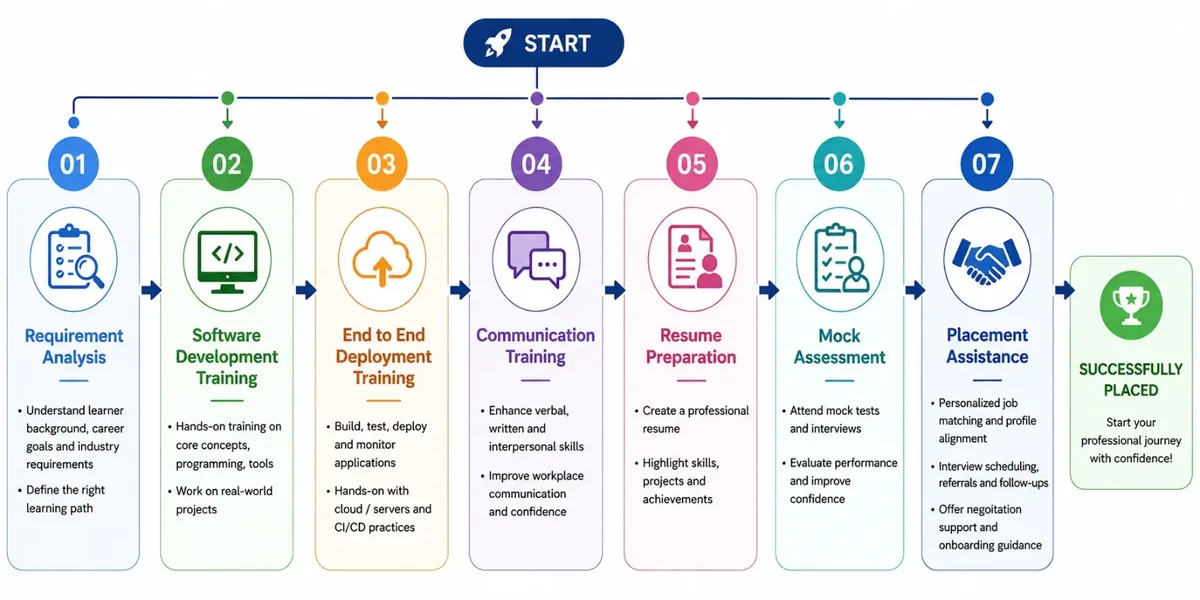
The course suits college students, aspiring database developers, backend engineers and IT professionals. It prepares you for roles such as PL/SQL Developer, Oracle Database Developer and SQL Developer. Placement training (resume building, mock interviews and coding tests) is part of the course, and you can book a free demo class before you enrol. For project experience, continue with our internship programs in Salem; related courses include MySQL Training in Salem and MS SQL Server Training in Salem.
The Oracle SQL & PL/SQL Training Course at Dev Technology Solutions, Salem is designed
to equip students and professionals with strong database programming and management skills using
Oracle Database — one of the most widely used relational database systems in the world. This
comprehensive course covers everything from fundamental SQL concepts to advanced PL/SQL programming,
enabling learners to build powerful, secure, and high-performance database-driven applications.
Oracle SQL & PL/SQL continues to be one of the most in-demand skill sets in software development,
data engineering, analytics, and enterprise application development.
This course has been structured to support learners of all levels — from beginners with no prior
database experience to working professionals looking to upgrade their RDBMS expertise. The training
begins with Oracle SQL fundamentals, where students learn core concepts such as writing queries,
filtering data, joins, subqueries, functions, constraints, and data manipulation. These concepts
form the backbone of managing and querying relational databases used in real-world applications.
As the course progresses, learners move into PL/SQL programming, focusing on stored procedures,
functions, triggers, cursors, packages, and exception handling. Students also gain hands-on
experience in building modular and reusable database components that enhance performance and
maintainability. The course further covers real-time industry scenarios such as transaction
management, performance tuning basics, and working with enterprise-level Oracle architectures,
preparing learners for careers in database development, application programming, and data operations.
Dev Technology Solutions provides flexible batch timings for all students in Salem. Choose a daily evening batch or a weekend batch, in the classroom or online. If this schedule doesn’t match your timing, please let us know — we’ll arrange one that suits your convenience.

Can’t find a batch that fits your timing?
Our Oracle SQL & PL/SQL trainers at Dev Technology Solutions teach Oracle database programming through practical sessions: each topic is explained, demonstrated and then practised on real examples, with doubt-clearing and reviews of your work.
Sessions are led by trainers with 10+ years of hands-on experience in Oracle database programming. Read about our trainers on the About Us page.
Alongside the technical modules, trainers help you prepare for interviews for roles such as PL/SQL Developer, Oracle Database Developer and SQL Developer, using the projects you build during the course.
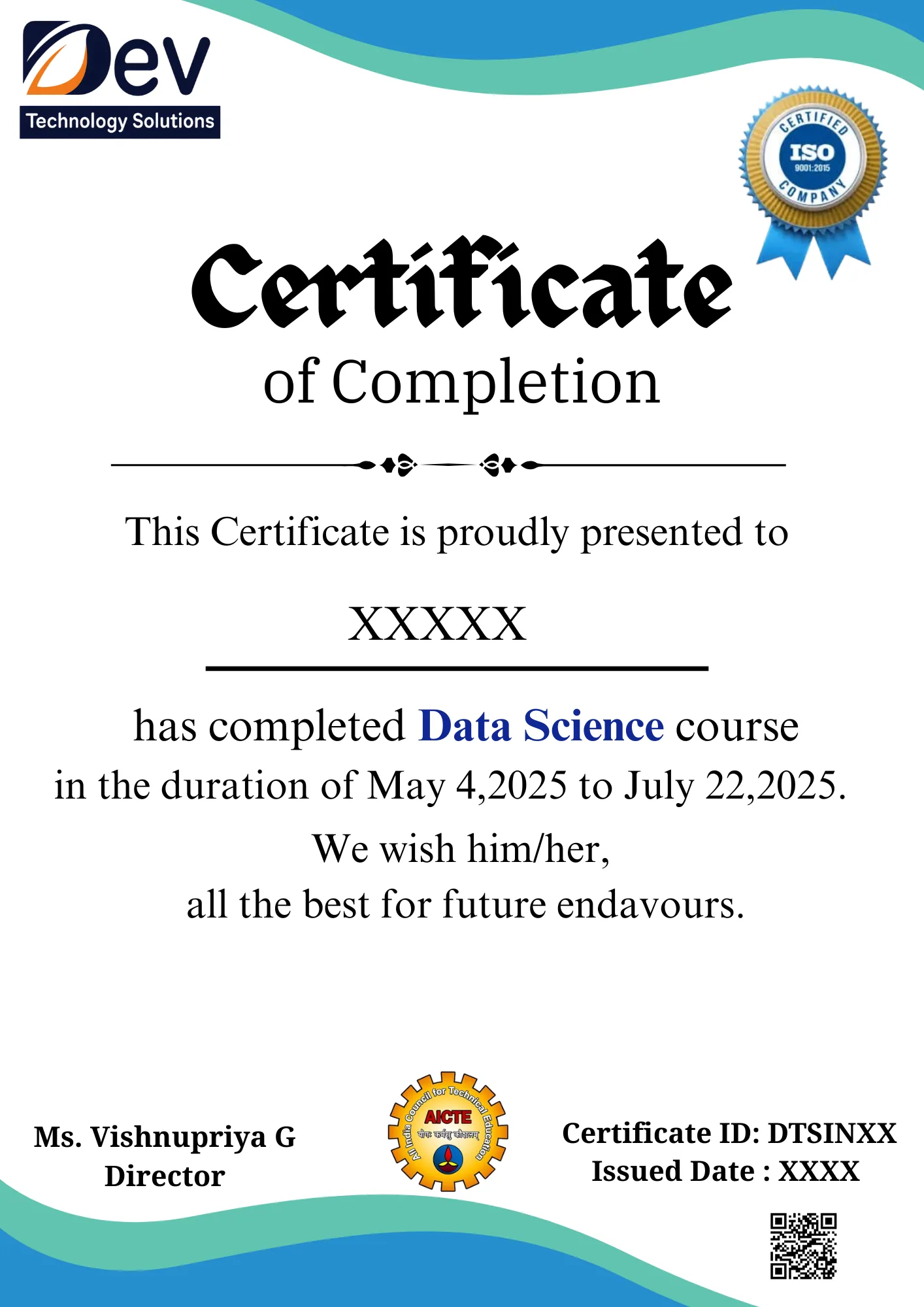
After you complete the Oracle SQL & PL/SQL training and its project work, Dev Technology Solutions issues a course completion certificate. Employers can check it on our certificate verification page.
The certificate records the Oracle SQL & PL/SQL skills you practised, including SQL Basics, Constraints & Database Objects and Querying Data, and you can add it to your resume and LinkedIn profile together with the code of your course project.
This is a Dev Technology Solutions course certificate, not a vendor certification. Oracle certifications are awarded by Oracle after its own exams; the course builds the practical skills those exams test, and our trainers can advise you on preparing for them.
The syllabus has 20 modules: Introduction to Databases & Oracle, SQL Basics, Constraints & Database Objects, Querying Data, Oracle Built-in Functions, Joins, Grouping & Aggregation, Subqueries, Set Operators & Advanced SQL, PL/SQL Basics, PL/SQL Control Statements, Exception Handling, Cursors, Procedures & Functions, Packages, Triggers, Advanced PL/SQL, Performance & Optimization, Real-Time Projects and Interview Preparation.
Both. You can attend classroom sessions at our centre in RBT Mall, Meyyanur Byepass Road, Salem, or join live online classes.
A daily batch (Monday to Sunday) runs at 6:00 PM IST, 1 hour 30 minutes per session. Weekend batches run on Saturday at 10:00 AM IST (3 hours) and Sunday at 5:00 PM IST (2 hours). If none of these suit you, we can arrange a batch at a time that works for you.
The course suits college students, aspiring database developers, backend engineers and IT professionals.
Yes. After you finish the training and project work, you receive a Dev Technology Solutions course completion certificate, which employers can check on our certificate verification page. It is not a vendor certification: Oracle certifications are awarded by Oracle after its own exams.
Yes. Placement training and assistance include resume building, mock interviews, coding tests and job referrals, to prepare you for roles such as PL/SQL Developer, Oracle Database Developer and SQL Developer.
Fees depend on the course and batch, so call +91-74021-01006 or contact us for the current fee. You can pay by card, net banking or UPI, digital wallet, EMI or cash.
Yes. Book a free demo class on this page or call +91-74021-01006.
More questions? See our general FAQs or contact our Salem team.